


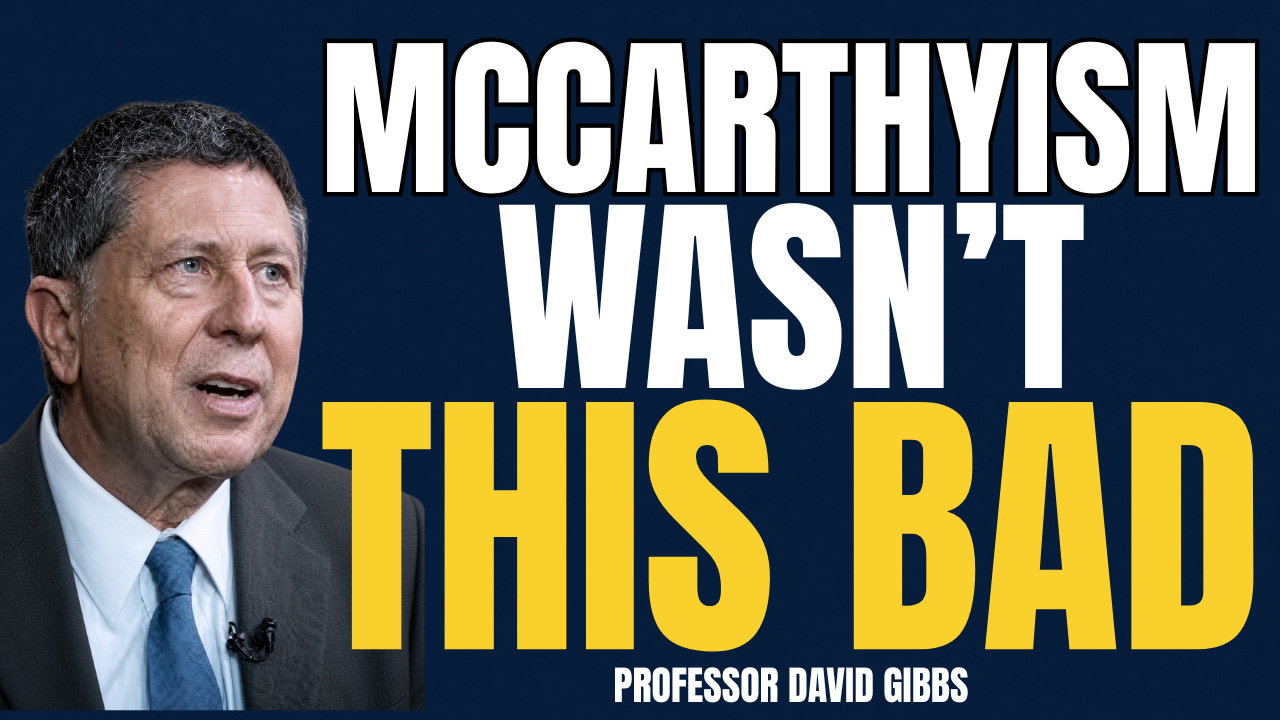
We are told, almost daily, that Vladimir Putin is finished. Weak. Isolated. One more package of sanctions away from being overthrown by his own people. It has become the background music of European politics. I discussed the ongoing suppression of free debate in the western world Professor David Gibbs and he remarked that what we are experiencing today is far worse than McCarthyism
The Economist recently wrote about Putin’s declining popularity, citing the Levada Centre yet not providing the data. David looked at The Levada Centre website and found Putin’s approval at 74 percent. That is indeed a decline from last year. But it is also a figure that would make him, on present evidence, the most popular major leader in Europe.
Friedrich Merz, by contrast, is polling around 10 percent. France and Britain are not far behind in the race to the bottom.
David’s argument is that Europe has started to believe its own propaganda. The original claim — that Putin was hanging by a thread — has hardened into an underlying assumption of state propaganda. If the assumption is true, there is no need to look at the battlefield, the empty towns, the corruption, or the fact that Ukraine is being kept upright by a drip-feed of money from governments that cannot afford it. The facts become an inconvenience.
People who discuss the facts become a problem, rather than the facts themselves.
That is where the McCarthy comparison comes in. Gibbs is an historian. His point is that the original McCarthy period was ugly, but it eventually ran into the institutions it was supposed to protect. It became a threat to the Cold War establishment itself and was reined in.
What we have now, especially in Europe, is in some ways worse. There is less space to hear the other side than there was even in the 1950s.
The offence is not only against the speaker but against the listener. You are not supposed to hear an unauthorised account of what is happening in Ukraine or, indeed, in Iran.
I have seen that close up. After twenty-four years in the Foreign Office, including four and a half in Moscow, I am more nervous about travelling back through Heathrow on my way home from Valdai, than I am about the surveillance I will undoubtedly be subject to on the Russian side.
That should tell you something about the atmosphere we have created.
David draws the Vietnam parallel as well. Officials counted bodies, announced victories, and punished junior officers who came home and said the war was being lost. The public believed it until it couldn’t. Then came the credibility gap.
He thinks something like that is coming, not because the press has suddenly grown a spine, but because the economic bill for war is landing on people who were never asked whether they wanted to pay it.
War as the last thing holding a fracturing political class together only works for so long.
We also talked about Iran, Trump’s need for a war of his own, and the American habit of treating diplomacy as an order you give other people.
A political class that cannot tolerate an accurate description of a war is not preparing for peace. It is preparing for a bigger blunder and more aggressive repression to cover it up.
You can watch the full conversation here:
Wherever you are in the world, whatever your nationality and religion, I wish you much peace.